ITRS Online Resources
Thought leadership by the experts in monitoring
Join us at ITRS Elevate Singapore on 17 September. Register today.
Thought leadership by the experts in monitoring

Cloud Adoption in Financial Services Financial services firms today are facing an unprecedented number of challenges, internal and external to the business. Firms must continue to attract new clientele and retain long-standing customers, all while managing increasing demands from

The Facts: Did you know the typical data centre server only operates at 12 to 18 percent of its capacity?[1] This is staggeringly low, but technical staff who are managing and maintaining large data centres are more concerned with keeping the lights on than worrying about ef

It took just 30 minutes for Knight Capital to lose a staggering $440 million because of glitches in newly deployed code. The catastrophe in 2012 became the infamous poster child of the perilous reputational consequences of poorly monitored trading infrastructure.

Analysts have estimated that 30% of outages are caused by lack of capacity and that globally there is $30 Bn of over spend on IT capacity. The issue is how to find the ‘hot spots’ and the ‘cold spots’. Capacity Planning and Management is the first logical step to making sure that your business doesn’t become a number in those statistics.

ITRS has been well-known in the financial world for its infrastructure and applications monitoring tool Geneos for over 20 years. But with continued developments in capacity management, the firm has diversified its technology.

At ITRS, one of our key company values – do the right thing, not the easy thing – reinforces the old cliché that there are some things you just can’t rush.

What does Geneos do? As a new starter at ITRS I have spent the last couple of weeks submerged in the world of Infrastructure and Applications Monitoring Systems for Finance.
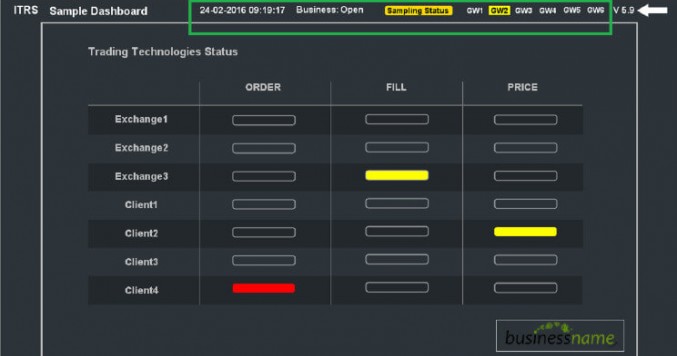
IT Monitoring is about ensuring the availability of business services by checking, at regular intervals, the underlying IT estate which enables said service. The estate may include infrastructure (hardware, networks, storage), middleware, databases, applications, as well as end-user monitoring.